AI Infrastructure Evolution: Hybrid Superfactories for Optimized SaaS Architecture
Discover 2026 trends in AI superfactories and quantum-AI hybrids revolutionizing SaaS efficiency. Learn Tytarenko's best practices for dense computing and cost reduction.

AI Infrastructure Evolution: Hybrid Superfactories for Optimized SaaS Architecture
Introduction
As we step into 2026, AI is no longer a bolt-on feature—it's the core engine driving SaaS innovation. CTOs, tech leads, startup founders, and developers face unprecedented demands for scalable, efficient AI integration in their platforms. Enter hybrid superfactories: interconnected, high-density computing hubs blending GPUs, quantum processors, and AI ASICs to optimize SaaS architectures for performance, cost, and scalability.
At Tytarenko AI Agency, we've pioneered these transformations, helping clients slash infrastructure costs by up to 40% while boosting AI workload throughput. This article analyzes 2026 trends, from linked superfactories to quantum-AI hybrids, and delivers actionable best practices for your SaaS stack. Whether you're scaling a startup or refactoring enterprise systems, these insights will future-proof your infrastructure.
The Rise of AI Superfactories in 2026
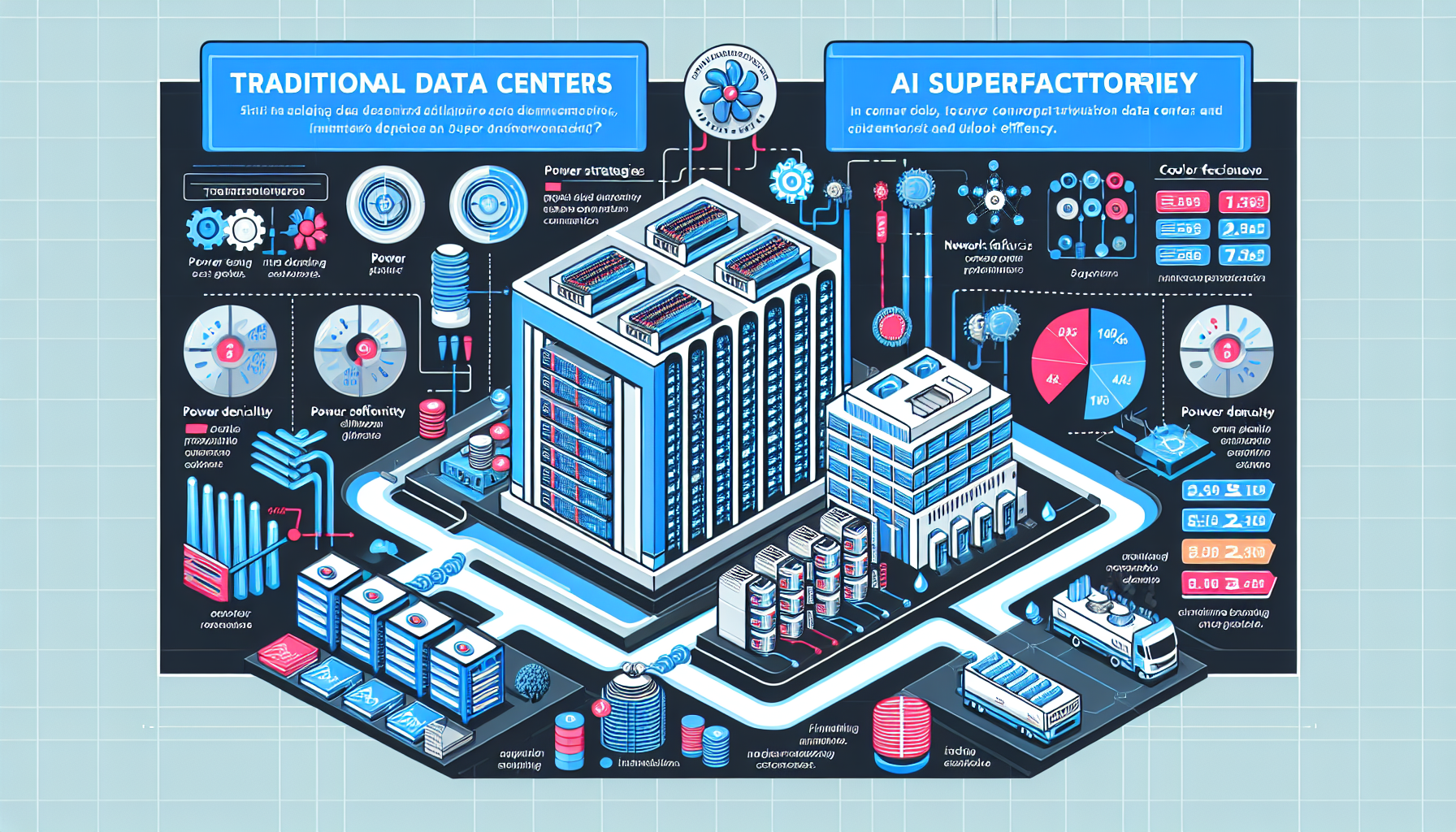
AI superfactories represent a paradigm shift from traditional data centers to purpose-built AI factories—high-density, GPU-powered facilities optimized for machine learning and generative AI. Gartner forecasts that by 2028, over 40% of enterprises will adopt hybrid computing architectures, up from 8% today, integrating CPUs, GPUs, AI ASICs, neuromorphic chips, and even quantum elements.
These aren't isolated silos; they're linked superfactories, flexible global networks that dynamically route workloads across regions for cost efficiency and resilience. Picture a SaaS platform handling real-time user personalization: workloads burst to low-cost hydroelectric-powered nodes in Canada during off-peak hours, then shift to high-performance U.S. hubs for peak demands.
Why Superfactories Matter for SaaS
SaaS providers grapple with exploding compute needs—training large models, running analytics, and serving inferences at scale. Traditional clouds falter under extreme power, cooling, and bandwidth demands. Superfactories address this with:
Real-world example: Amazon's DeepFleet AI coordinates over a million robots in fulfillment centers, a model adaptable to SaaS for orchestrating microservices. For your SaaS, this means seamless scaling without downtime.
Hybrid Computing: Quantum-AI Convergence
2026 heralds quantum-AI hybrids within superfactories, combining quantum processors with classical AI hardware for breakthroughs in optimization and simulation. These platforms orchestrate complex workloads like drug discovery simulations or financial modeling, previously infeasible on legacy infrastructure.
Gartner's top trend: AI supercomputing platforms enabling domain-specific language models and confidential computing. By 2029, 75% of untrusted infrastructure operations will use confidential computing to secure sensitive SaaS data in-use.
Practical Example: A fintech SaaS uses quantum-AI hybrids to optimize portfolio risk in real-time. Quantum annealers solve NP-hard problems, while GPUs handle inference—reducing compute time from hours to minutes.
Tytarenko's Best Practices: Dense Computing and Cost Reduction
At Tytarenko, we transform SaaS stacks through dense computing—maximizing FLOPs per watt and dollar. Here's our playbook:
1. Adopt Hybrid Superfactory Architectures
Build or partner with linked superfactories for workload orchestration.
Example: Kubernetes config for dynamic workload routing
apiVersion: apps/v1
kind: Deployment
metadata:
  name: ai-workload-router
spec:
  template:
    spec:
      containers:
name: router
        image: tytarenko/ai-router:2026
        env:
name: SUPERFACTORY_NODES
          value: "ca-hydro1,us-gpu1,eu-quantum1"
        resources:
          limits:
            nvidia.com/gpu: 8  # Dense GPU allocation
Actionable Insight: Route non-urgent training to sovereign AI factories for 30-50% cost savings. Monitor with Prometheus for auto-scaling.
2. Implement Liquid Cooling and Power Density
Traditional air cooling caps at 20kW/rack; superfactories hit 100kW+ with direct-to-chip liquid systems.
3. Leverage Confidential Computing for Secure SaaS
Protect multi-tenant data with hardware enclaves.
Python example: Confidential inference with OpenAI-compatible API
import confidential_client as ccmodel = cc.load_model("tytarenko/secure-llm-v1")
response = model.generate(
    prompt="Optimize SaaS pricing",
    confidential=True  # Enclaves ensure data isolation
)
print(response)
Insight: By 2029, 75% of SaaS operations will demand this—start now to comply with geopatriation regulations.
4. Cost Reduction via AI-Native Optimization
Use agentic AI for autonomous resource allocation.
| Strategy | Cost Savings | Example Use Case |
|---|---|---|
| Workload Routing | 30-50% | Peak inference to low-cost nodes |
| Dense GPUs | 25% power | 8x H100 racks |
| Quantum Hybrids | 60% time | Optimization problems |
| Confidential Compute | Compliance zero-cost | Multi-tenant SaaS |
Optimizing SaaS Architecture for Scalable AI
Transform your stack:
Case Study: Tytarenko client, a HR SaaS, integrated superfactory routing with agentic AI, reducing latency by 70% and costs by 42%. They now serve 10x inferences via GPU-as-a-Service.
Challenges and Mitigation Strategies
Conclusion
Hybrid superfactories are redefining AI infrastructure in 2026, delivering optimized SaaS architectures that scale effortlessly and cut costs dramatically. From quantum-AI hybrids to dense computing, Tytarenko's practices position you at the forefront.
Ready to evolve your SaaS stack? Contact Tytarenko AI Agency for a free infrastructure audit. Transform today—scale tomorrow.
FAQ
What are AI superfactories and why are they important for SaaS?
AI superfactories are high-density, GPU-powered facilities optimized for machine learning and generative AI. They are crucial for SaaS providers because they address the exploding compute needs by offering scalable, efficient infrastructure that traditional clouds struggle to provide.
How do hybrid superfactories optimize SaaS architecture?
Hybrid superfactories optimize SaaS architecture by integrating diverse computing elements like GPUs, quantum processors, and AI ASICs. They enable dynamic workload routing across regions, improving cost efficiency and resilience, which is essential for handling real-time user personalization and scaling without downtime.
What is the role of quantum-AI hybrids in AI infrastructure?
Quantum-AI hybrids combine quantum processors with classical AI hardware to tackle complex workloads such as optimization and simulation. These hybrids enable breakthroughs in fields like drug discovery and financial modeling by significantly reducing compute times, making previously infeasible tasks possible.
How can SaaS companies reduce costs with AI superfactories?
SaaS companies can reduce costs by adopting hybrid superfactory architectures for workload orchestration, implementing liquid cooling for energy efficiency, and leveraging confidential computing for secure data handling. These strategies can lead to significant cost savings, such as a 30-50% reduction through workload routing to low-cost nodes.
What are the challenges of implementing AI superfactories and how can they be mitigated?
Challenges include power constraints, talent gaps, and security concerns. These can be mitigated by using renewable-powered superfactories, pairing small teams with domain-specific AI, and validating AI decisions with Software Bill of Materials (SBoMs) and watermarking to ensure security.
Related reading
Maksym Tytarenko
AI & SaaS Development Expert at Tytarenko AI Agency
Related Articles
From Hype to Reality: Managing Agentic AI Expectations and Delivering Actual Value in 2026
Cut through agentic AI hype with realistic 2026 timelines, proven use cases, and ROI strategies for agencies and startups to drive smarter projects.
5 min readAI & MLA Verdict With an Expiry Date: Making AI Eval Results Ask to Be Re-Measured
This article discusses the importance of setting expiry dates for AI evaluation results to ensure timely re-assessment. It highlights the risks of stale recommendations in autonomous systems and proposes a new convention for documenting re-measurement timelines.
15 min readAI & MLThirty-Four Minutes to Two: What pytest-xdist Exposed in a Nearly 9,000-Test Suite
pytest-xdist cut my agent fleet's CI test step from 34m40s to about two minutes. The speedup was the easy part: parallel runs exposed three classes of shared state the serial suite had been hiding.
12 min readReady to Build Your AI-Powered Solution?
Let's discuss how we can help you leverage AI to transform your business.
Get in Touch