AI-Powered Scientific Discovery: Reference Architectures for Accelerating Materials R&D in SaaS Startups
This article provides reference architectures for AI systems that accelerate materials R&D in SaaS startups, using 2026 trends like generative synthesis models and autonomous labs to compress cycles from months to days. CTOs gain concrete workflows, pseudo-code, and tradeoffs for hypothesis generation, agent orchestration, and safe execution. Focus on implementable patterns grounded in Materials Project and DiffSyn advancements.

AI-Powered Scientific Discovery: Reference Architectures for Accelerating Materials R&D in SaaS Startups
Executive Summary
Tech innovators in materials science face extended R&D cycles due to manual hypothesis generation, simulation, and experimentation, often spanning months for SaaS product breakthroughs like novel battery materials or catalysts. This article outlines reference architectures for AI systems that generate hypotheses from curated datasets, propose synthesis routes, and integrate with autonomous labs, reducing iteration times from months to days through agentic workflows.
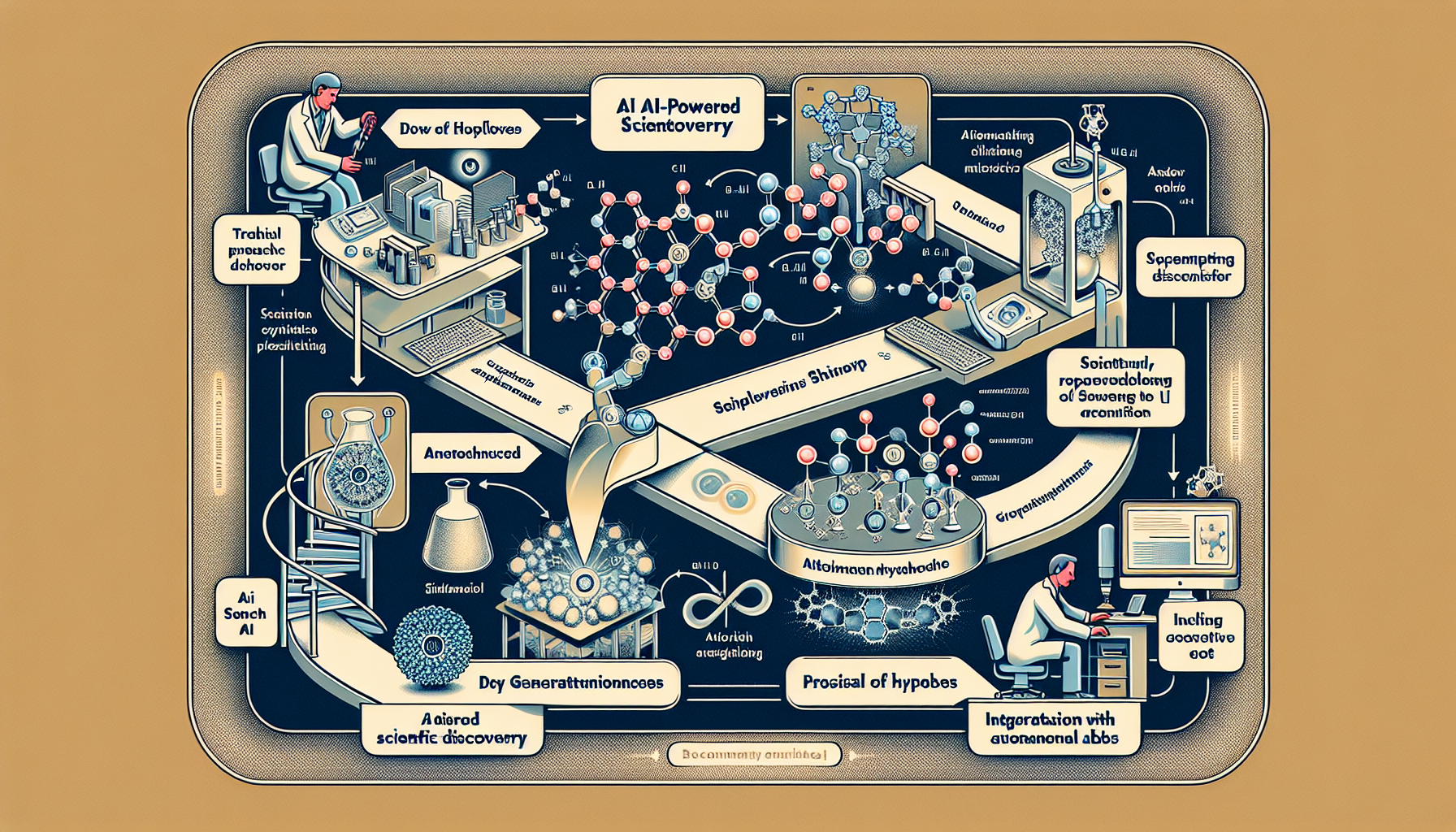
These patterns draw from 2026 advancements like the Materials Project's AI-ready databases and MIT's DiffSyn model, enabling startups to prototype research assistants using cloud-native stacks. CTOs and technical founders at seed-to-Series A SaaS companies should prioritize these to compete in energy tech or advanced manufacturing, where rapid materials discovery directly impacts product roadmaps.
Targeted at teams familiar with SaaS orchestration and LLMs, the focus is on implementable pipelines, tradeoffs in latency/cost, and safety layers for production deployment.
The Shift to AI-Driven Hypothesis Generation and Experimentation
In materials science, traditional R&D relies on domain experts manually curating hypotheses from literature and running physical experiments, creating bottlenecks in data synthesis and validation. AI systems address this by ingesting large-scale datasets—such as the Materials Project's 650,000+ compounds with computed properties—to train models that predict material behaviors and propose novel candidates.
Core Mechanism: Generative Models for Synthesis Pathways
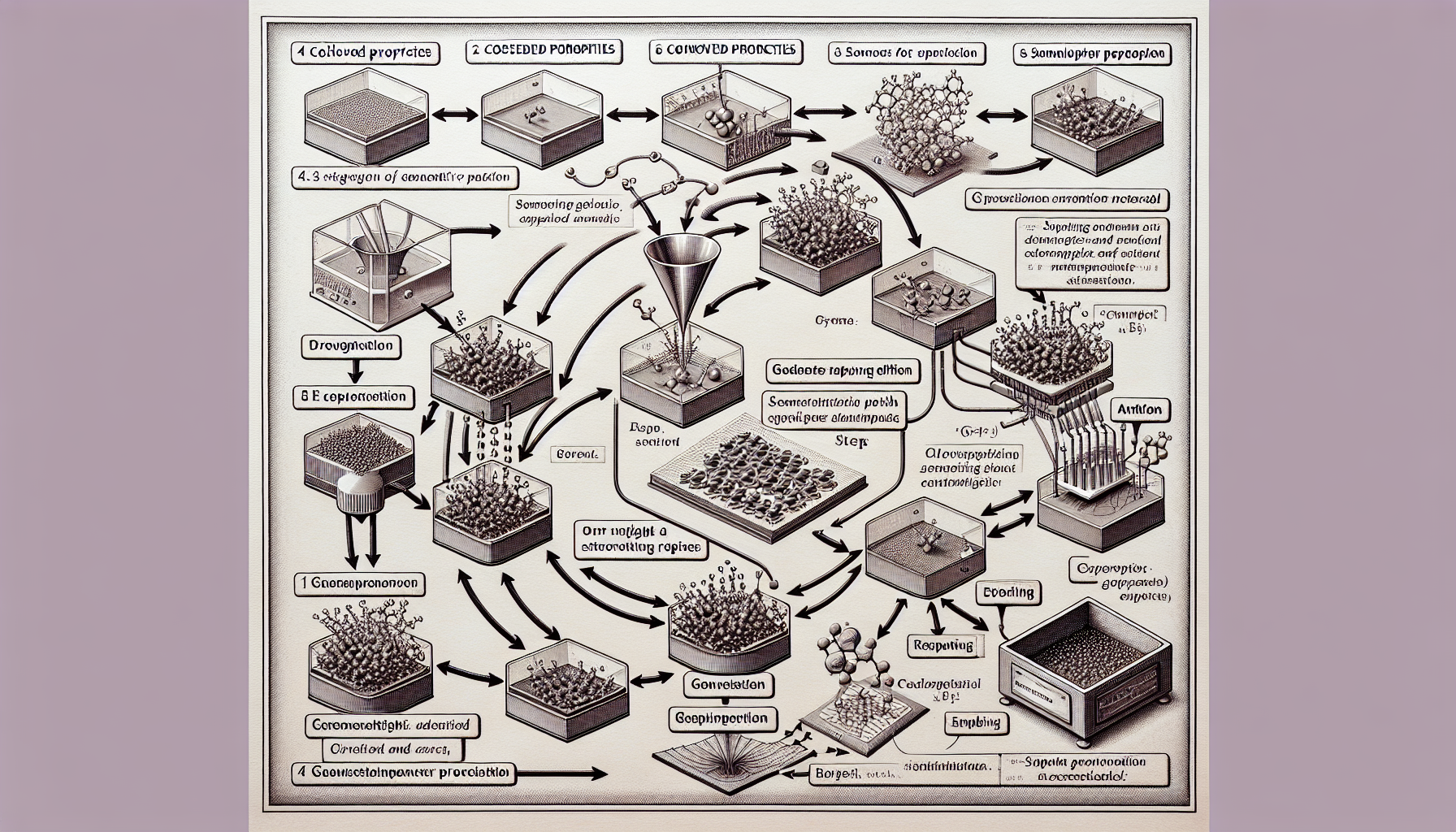
Models like MIT's DiffSyn train on 23,000+ synthesis recipes from scientific papers, using diffusion-based denoising to generate viable pathways for target materials like zeolites. The workflow ingests a desired property (e.g., thermal stability), samples 1,000+ recipes in under 1 minute, and ranks them by predicted success, shifting from trial-and-error to data-driven proposals.
Real-World Application: Superconductivity Insights
Tohoku University and Fujitsu used causal inference AI on ARPES data to uncover electron-state relationships in superconductors, automating insight extraction from synchrotron measurements. This integrates with SaaS platforms for real-time querying of proprietary datasets.
Implementation Considerations
Data requirements include high-quality, structured inputs (e.g., CIF files for crystal structures); stack choices favor graph neural networks (GNNs) for molecular representations via PyTorch Geometric, hosted on AWS SageMaker for scalable training. Integration points include API endpoints for hypothesis output to lab automation scripts. Monitor via Prometheus for inference latency (less than 500ms per target) and data drift using Great Expectations.
Reference Architecture for AI Research Assistants
A production-grade AI research assistant for materials R&D follows an agentic pipeline: ingestion, reasoning, planning, execution, and feedback. This pattern decouples components for scalability in SaaS environments.
Component Breakdown
Textual Flow
User query (e.g., "catalyst for CO2 reduction") → RAG retriever → Reasoning LLM (hypothesize candidates) → Planner (generate synthesis steps) → Policy engine (check safety/feasibility) → Sandbox executor (simulate) → Validator (compare to benchmarks) → Approval gate (human/CTO review) → Output to ticketing system (Jira) → Audit log (ELK stack).
SaaS Integration
Expose via FastAPI gateway with OAuth, feeding results to product telemetry (e.g., Snowflake for analytics).
Vibe Coding for Rapid Prototyping
Vibe Coding Defined
An iterative, LLM-assisted coding style where engineers describe system "vibes" (high-level behaviors) in natural language, and agents generate/refine code scaffolds. For AI research assistants, this prototypes agent pipelines in hours instead of weeks.
Workflow Example
Prompt: "Build a materials hypothesis generator using Materials Project API, GNN for property prediction, and diffusion for recipes." Agent iterates: scaffold FastAPI service → integrate Hugging Face DiffSyn-like model → add sandbox for DFT calls → test on zeolite benchmark.
Operational Implication
Startups deploy prototypes to Vercel or Railway, A/B test against manual workflows. Tradeoff: Higher initial prompt engineering cost but 5x faster MVP cycles; risks include hallucinated code requiring unit tests.
Case Study: SaaS Startup Accelerating Battery Materials Discovery
Context
A 25-person SaaS startup developing simulation software for EV battery optimization, constrained by $2M seed funding and a 3-month runway to MVP. Goal: Identify 10 novel cathode candidates with over 20% energy density gain.
Stack
GCP Vertex AI (orchestration), BigQuery (data), Pinecone (RAG), open-source GNNs (Spektral), Materials Project API. Model providers: Anthropic Claude for planning, fine-tuned diffusion model via Hugging Face.
Step-by-Step Workflow
Outcome
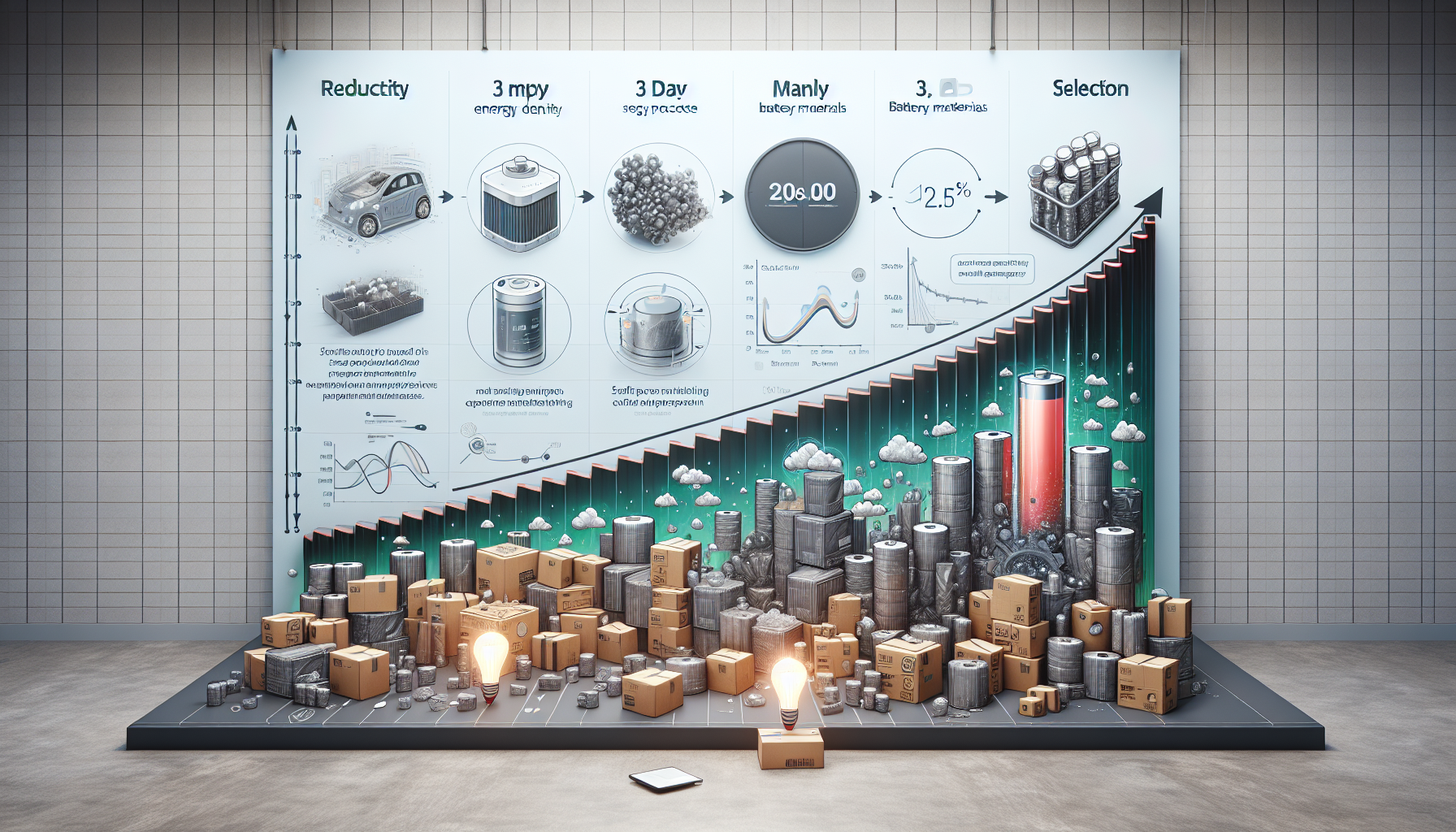
Reduced candidate screening from 3 months (manual literature review + simulation) to 3 days per cycle, enabling weekly iterations and clearer prioritization for engineering sprints. Directional impact: Team focused 70% more on integration versus discovery.
Failure Mode
Early diffusion model hallucinated unstable recipes (detected via simulation crash rates exceeding 30%). Mitigation: Added rule-based validator (e.g., thermodynamic feasibility checks) and human-in-loop for the first 20 cycles; post-fix, crash rate reduced to less than 5%. Lesson: Always pair generative models with physics-informed surrogates.
Practical Implementation: Pseudo-Code for Agent Orchestrator
Core agent loop using LangGraph pattern
def research_assistant(query: str, max_iters: int = 5):
    state = {'query': query, 'hypotheses': [], 'feedback': []}

    for i in range(max_iters):
        # Step 1: RAG + Reasoning
        docs = rag_retrieve(state['query'])
        hypotheses = llm_reason(docs, state['query'])
        state['hypotheses'].extend(hypotheses)

        # Step 2: Planning
        plans = diffusion_planner(hypotheses)

        # Step 3: Policy & Sandbox
        safe_plans = policy_engine(plans)  # Check cost, safety
        results = sandbox_execute(safe_plans)  # DFT simulation

        # Step 4: Validate & Approve
        validated = validator(results)
        if human_approve(validated):
            state['feedback'].append(results)
        else:
            break  # Early stop

    return rank_outputs(state)
Deployment Notes
Containerize with Docker, scale via Kubernetes HPA on CPU/GPU mixes. Cost: approximately $0.50 per full cycle (128 A100-GPU hour).
Challenges & Constraints
Technical Bottlenecks
Context length limits LLMs to approximately 10,000 compounds per iteration; mitigate with hierarchical RAG. Data quality issues in open datasets require curation pipelines (e.g., outlier detection via Isolation Forest).
Cost Implications
Inference dominates (e.g., $1-5k/month for 100 cycles at scale); optimize with caching and smaller models. Egress from Materials Project free-tier caps at 1,000 queries per day.
Organizational Friction
Skills gaps in GNN fine-tuning demand 1-2 ML engineers; ownership splits between R&D and production engineering. Security: Sandbox all executions, audit via Cloud Audit Logs.
Adoption Risks
Vendor lock-in to diffusion APIs; counter with open models. Model drift from uncurated feedback—implement quarterly retrains. Leadership expectations for instant wins lead to shadow IT; enforce via centralized API.
Safety Architecture
All executions route through policy engine (e.g., OPA for rules), sandbox (Firecracker VMs), approval gates, and immutable audit trails.
Actionable Takeaways
FAQ
How does AI accelerate materials R&D in SaaS startups?
AI accelerates materials R&D in SaaS startups by using AI systems to generate hypotheses from large datasets, propose synthesis routes, and integrate with autonomous labs. This reduces iteration times from months to days, enabling faster development of new materials.
What models are used for generating synthesis pathways in materials science?
Models like MIT's DiffSyn are used for generating synthesis pathways in materials science. These models train on thousands of synthesis recipes and use diffusion-based denoising to generate viable pathways for target materials, significantly speeding up the discovery process.
What are the key components of an AI research assistant for materials R&D?
An AI research assistant for materials R&D includes a data layer for indexing, a reasoning engine for hypothesis generation, a planner for experiment sequences, an execution sandbox for simulations, and an orchestrator to manage stateful loops. These components work together to streamline the research process.
How do SaaS startups benefit from AI in battery materials discovery?
SaaS startups benefit from AI in battery materials discovery by reducing candidate screening times from months to days, allowing for weekly iterations. This accelerates the development of novel cathode candidates with significant energy density gains, optimizing the R&D process.
What challenges do AI systems face in materials R&D?
AI systems in materials R&D face challenges such as context length limits in LLMs, which restrict iterations to about 10,000 compounds, and data quality issues in open datasets. These require curation pipelines and hierarchical retrieval methods to ensure accurate and efficient research outcomes.
Related reading
Maksym Tytarenko
AI & SaaS Development Expert at Tytarenko AI Agency
Related Articles
AI Sequential Workflows: Architectures for Reliable Enterprise Automation
Sequential AI workflows chain models and logic into reliable pipelines, outperforming standalone agents for enterprise automation. This article details architectures, a SaaS case study, and implementation blueprints using open-source tools for 2026 production environments. CTOs and engineers gain patterns to accelerate prototyping while managing costs, latency, and governance.
6 min readAI & MLA Verdict With an Expiry Date: Making AI Eval Results Ask to Be Re-Measured
This article discusses the importance of setting expiry dates for AI evaluation results to ensure timely re-assessment. It highlights the risks of stale recommendations in autonomous systems and proposes a new convention for documenting re-measurement timelines.
15 min readAI & MLI Gave a New AI Model a Full-Cycle Security Audit. Here Is How It Went
A full external security audit by one AI model: six attack surfaces, ~60 techniques, 13 findings, and the honest limits of what an agent may do.
11 min readReady to Build Your AI-Powered Solution?
Let's discuss how we can help you leverage AI to transform your business.
Get in Touch