Micro-SaaS Automation Architectures: AI Patterns for Solopreneur Scalability
This guide provides AI architectures for micro-SaaS solopreneurs, focusing on SLMs, on-device deployment, and agentic workflows with governance. Learn reference patterns, implementation code, and tradeoffs for scalable automation in lead gen, reviews, and compliance. Ideal for CTOs building low-overhead revenue systems in 2026.

Micro-SaaS Automation Architectures: AI Patterns for Solopreneur Scalability
Executive Summary
Solopreneurs building micro-SaaS products face resource constraints that demand low-overhead AI automation for core functions like lead generation, customer support, and compliance reporting. This article outlines reference architectures using small language models (SLMs), on-device deployment, and agentic workflows to enable autonomous revenue operations without large teams or budgets.
In 2026, integration platforms and edge AI shift micro-SaaS from manual tools to self-operating systems, reducing operational load while maintaining governance. CTOs and founders of early-stage SaaS ventures should prioritize these patterns to achieve scalability with minimal vendor lock-in and predictable costs.
Targeted at technical leaders familiar with cloud APIs and AI inference, the guide emphasizes implementation logic, safety layers, and tradeoffs for production deployment.
The Shift to Agentic Micro-SaaS Architectures
Micro-SaaS traditionally relies on simple CRUD applications with dashboard interfaces, but 2026 demands agentic systems—autonomous workflows that observe data, reason, plan, and execute actions without constant human input. An agentic workflow decomposes tasks into a planner (generates steps), tools (APIs or scripts for execution), memory (stores context across runs), and orchestration (coordinates retries and escalation).
Reference Architecture: Core Components
A production micro-SaaS agent stack includes:
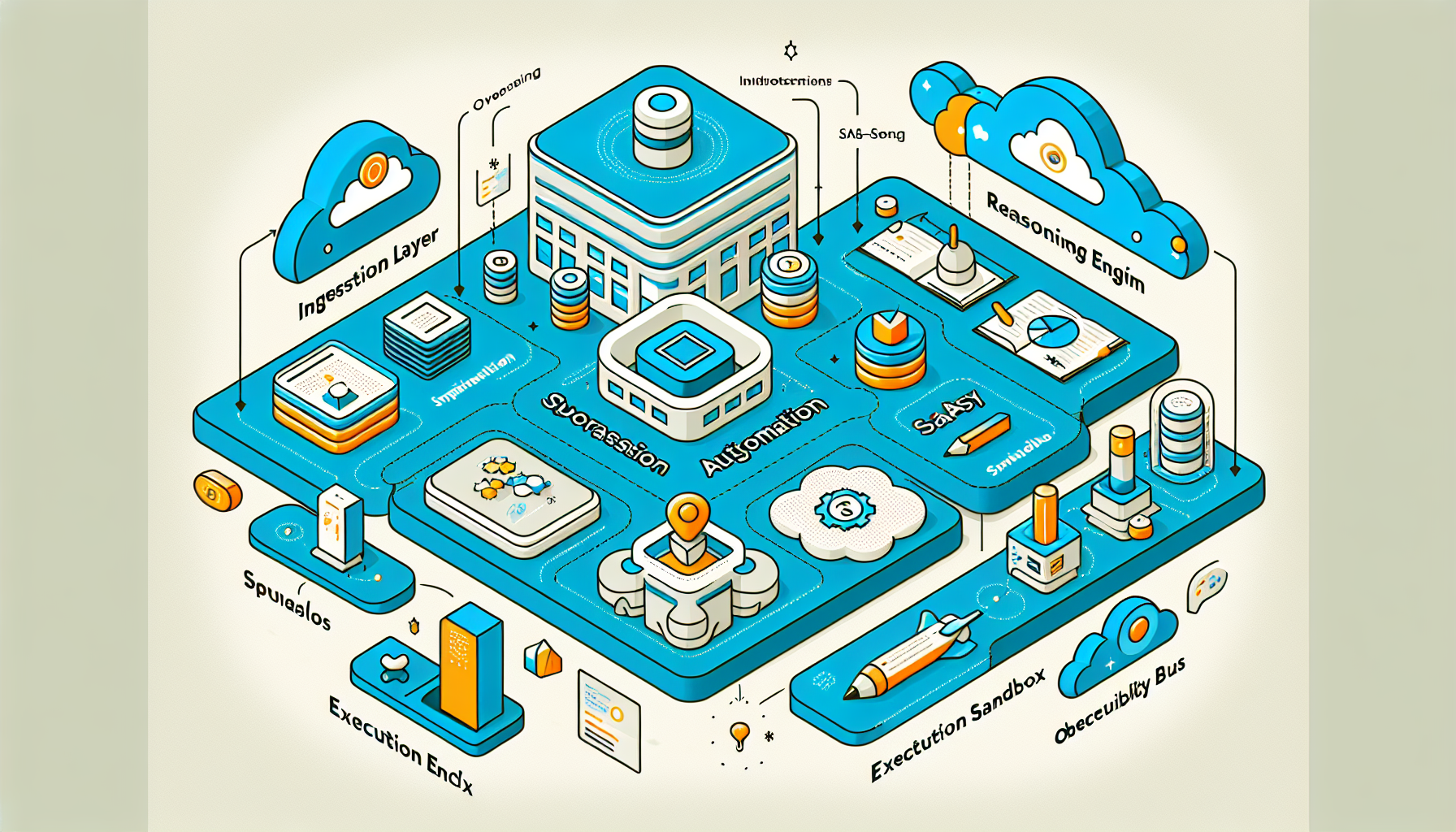
Operational Implication: This decouples compute from cloud costs; on-device SLMs handle 80% of routine inferences, escalating only complex cases to hosted LLMs, cutting bills by prioritizing local processing.
Example Scenario: A lead generation agent monitors new Shopify store domains, enriches with public data, drafts outreach emails, and schedules sends via an approval queue. Data flows: Domain API -> Enrichment (SLM on-device) -> Policy check -> Email API.
On-Device Deployment for Low-Overhead Scalability
On-device AI uses SLMs fine-tuned for specific domains, running on consumer hardware or lightweight cloud instances to minimize latency and egress fees. SLMs are compact models (1-7B parameters) with task-specific tuning, offering predictable outputs over general LLMs.
Implementation Workflow
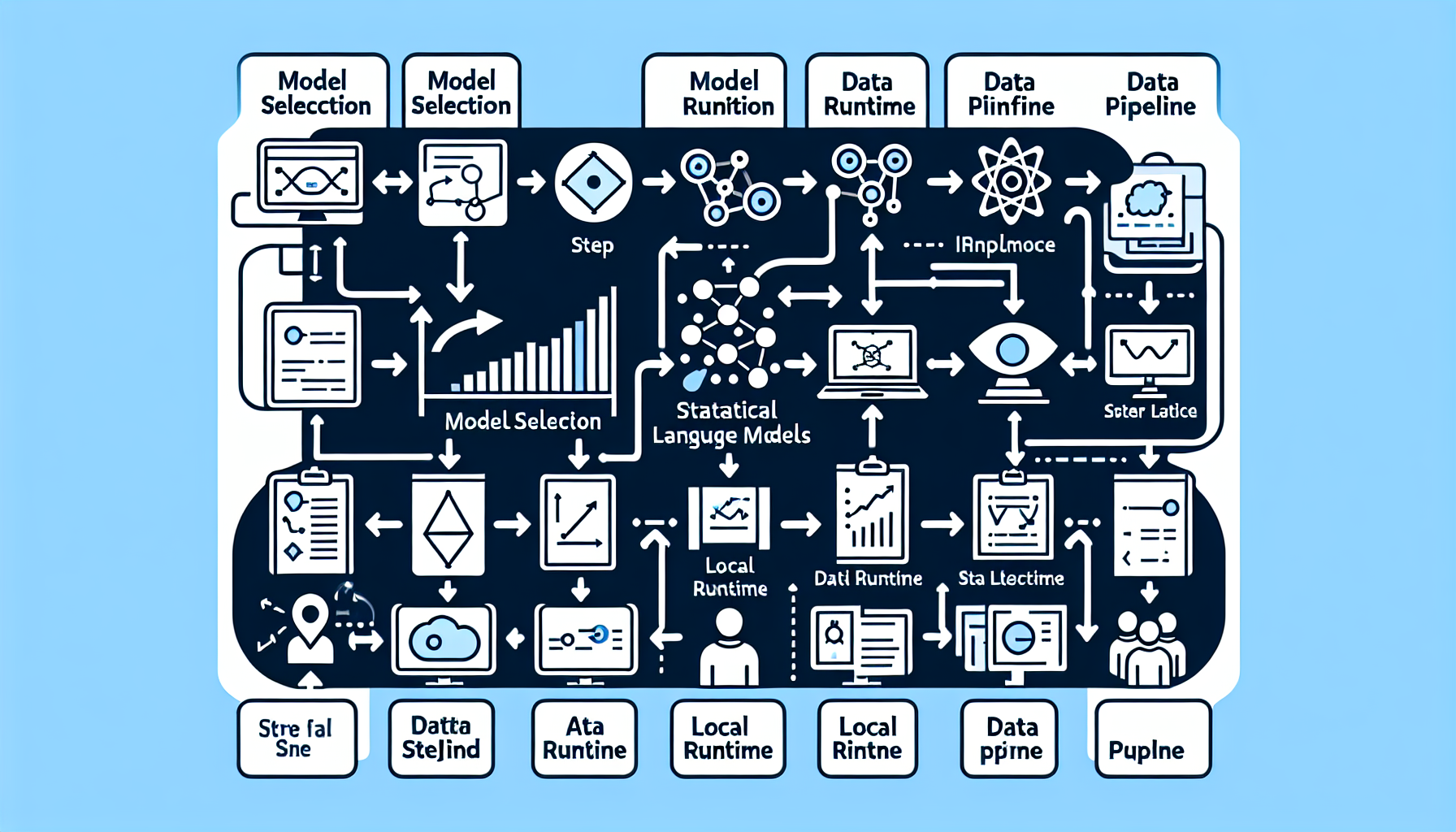
Tradeoffs:
| Option | Latency | Cost | Reliability | Use Case |
|---|---|---|---|---|
| On-Device SLM | <100ms | Near-zero inference | High (no network) | Routine tasks like email drafting |
| Hosted LLM | 500ms-2s | $0.01-0.10/1k tokens | Variable (throttling) | Complex planning |
| Hybrid | 100-500ms | Low (escalate 10%) | Balanced | Production default |
Security Implication: Local processing sidesteps data privacy risks in regulated niches like ESG reporting, where SMBs track emissions without uploading sensitive metrics.
Agentic Workflows with Governance and Ethics
Autonomous agents require a safety architecture to mitigate risks like hallucinations or unauthorized actions: User request -> Reasoning model -> Planning model -> Policy engine (rule-based checks) -> Sandboxed execution -> Validation (diffs, tests) -> Approval gate -> Apply -> Audit log.
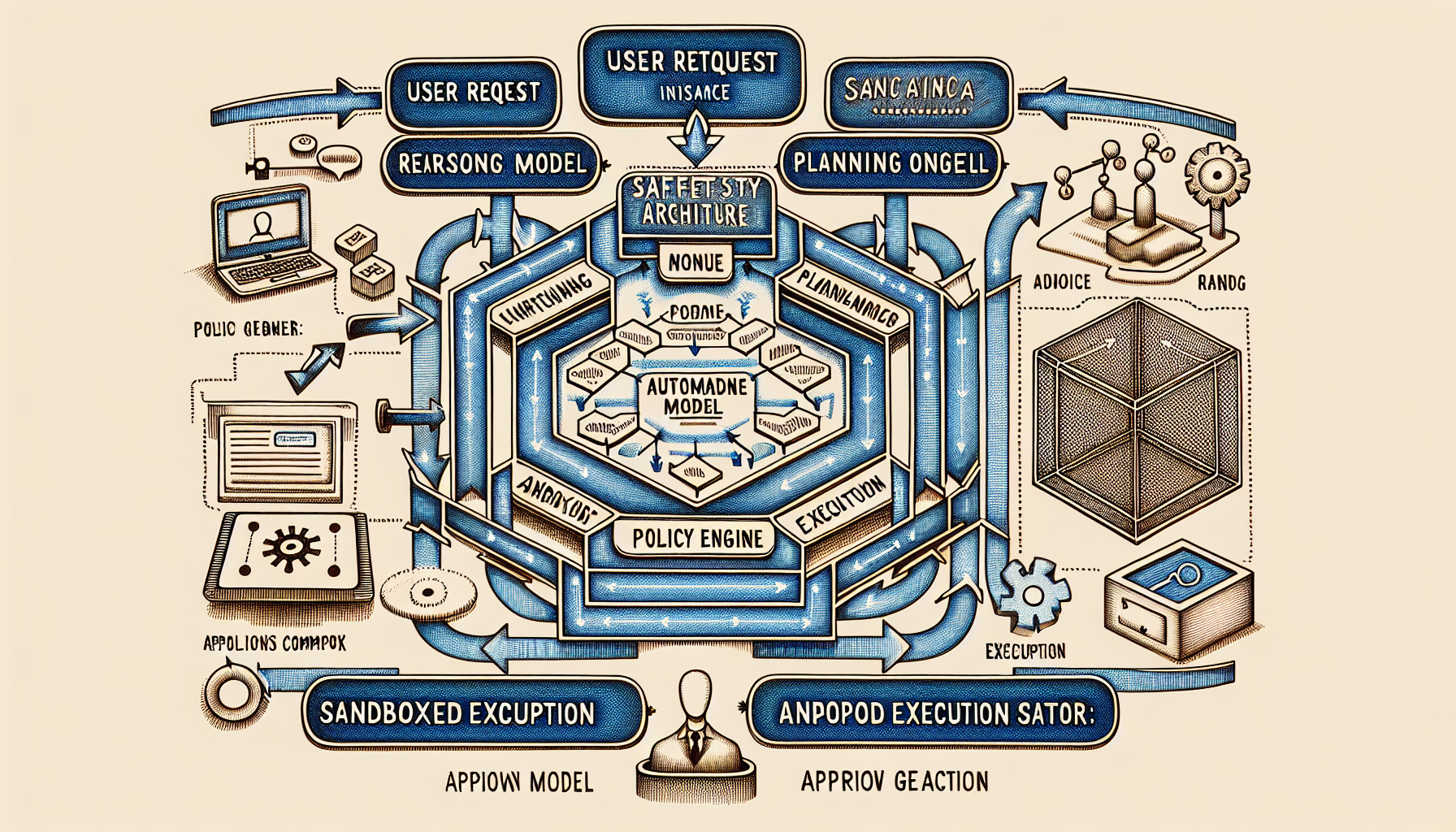
Ethics Integration
Embed bias checks and fairness audits in the pipeline. For instance, an AI ethics auditor scans outputs for demographic skew before deployment. Vibe Coding, a rapid prototyping method, iterates UIs and logic via natural language prompts to SLMs, accelerating builds from idea to MVP in days.
Workflow Example: Review analyzer agent:
Concrete Application: E-commerce owners drown in reviews; the agent extracts actionable insights (e.g., "Fix sizing inconsistencies in 20% of complaints"), automating what manual analysis misses.
Case Study: Autonomous Lead Generation for Freelance Agencies
Context: A solopreneur builds a micro-SaaS for agencies struggling with lead prospecting. Constraints: $100/month budget, solo operation, target 100 users Year 1. Goals: Automate domain monitoring, personalization, and response tracking. Delivered builds of this shape are documented in the agency showcase.
Stack:
Step-by-Step Workflow:
Failure Mode: Early version hallucinated false company data, leading to bounce rates >30%. Detection: Response tracking flagged low open rates. Mitigation: Added RAG over verified sources + approval gate for all sends. Post-fix: Directional improvement in reply rates via enriched personalization.
Outcome: Reduced manual prospecting from 20h/week to <2h, enabling focus on product iteration. Lessons: Prioritize durable queues for retries; copy sandbox validation; avoid over-reliance on cloud APIs early.
Practical Implementation: Pseudo-Code for Agent Orchestrator
Core loop for agentic execution, deployable as a serverless function:
Agent Orchestrator (Python + LangChain/Temporal-inspired)
import ollama # On-device SLMfrom typing import List, Dict
def agent_loop(user_request: str, tools: List[Dict], memory: Dict) -> Dict:
state = {'request': user_request, 'memory': memory}
# Step 1: Reason & Plan
plan_prompt = f"Decompose: {state['request']}. Tools: {tools}. Output JSON steps."
plan = ollama.chat(model='phi3', messages=[{'role': 'user', 'content': plan_prompt}])
state['plan'] = parse_plan(plan['message']['content'])
# Step 2: Policy Check
if not policy_engine(state['plan']): # e.g., no high-risk actions
return {'error': 'Policy violation', 'log': state}
# Step 3: Execute in Sandbox
for step in state['plan']:
tool = select_tool(step, tools)
result = sandbox_execute(tool, step['params'])
state['observations'].append(result)
if validation_fails(result): # Diff check, security scan
escalate_hitl(state)
break
# Step 4: Reflect & Output
final = ollama.chat(model='phi3', messages=build_chain(state))
audit_log(state, final)
return {'output': final, 'trace': state}
Rollout Plan:
Challenges and Constraints
Technical Bottlenecks: SLM context limits (4k-8k tokens) fragment long histories; mitigate with hierarchical memory (summary + raw excerpts). Integration complexity rises with multi-tool agents—use schema registries for API consistency.
Cost Drivers: Inference dominates (SLM: $0.001/1k tokens vs. LLM $0.01); data egress adds 20-30% overhead. Track via per-run metering.
Organizational Friction: Solopreneurs lack review bandwidth; implement async HITL via Slack bots. Compliance: Audit trails mandatory for actions like auto-refunds.
Risks: Model drift erodes accuracy quarterly; schedule fine-tuning. Vendor lock-in: Favor open standards (OpenAI-compatible APIs). Shadow IT from rapid Vibe Coding; enforce IaC for infra.
Actionable Takeaways
FAQ
What is micro-SaaS automation architecture?
Micro-SaaS automation architecture refers to the design of small-scale SaaS products that leverage AI to automate core functions like lead generation and customer support. This approach uses small language models, on-device deployment, and agentic workflows to enable solopreneurs to scale their operations with minimal resources and cost.
How do agentic workflows help in micro-SaaS?
Agentic workflows in micro-SaaS help by creating autonomous systems that can observe data, reason, plan, and execute actions without constant human input. These workflows decompose tasks into planners, tools, memory, and orchestration components, reducing the need for manual intervention and allowing solopreneurs to focus on other aspects of their business.
What are the benefits of on-device AI deployment for micro-SaaS?
On-device AI deployment for micro-SaaS offers benefits like reduced latency and lower costs by running small language models on consumer hardware or lightweight cloud instances. This approach minimizes reliance on cloud services, cutting egress fees and providing predictable outputs, which is particularly advantageous for routine tasks like email drafting.
What is the role of a reasoning engine in micro-SaaS?
In micro-SaaS, the reasoning engine is responsible for task decomposition, using small language models optimized for low-latency inference. It helps in breaking down complex tasks into manageable steps, enabling the system to perform actions autonomously and efficiently.
How does micro-SaaS ensure data privacy and security?
Micro-SaaS ensures data privacy and security by using on-device processing, which avoids uploading sensitive data to the cloud. Additionally, it incorporates policy checks and sandboxed execution environments to prevent unauthorized actions and protect against risks like hallucinations.
Related reading
Maksym Tytarenko
AI & SaaS Development Expert at Tytarenko AI Agency
Related Articles
Enhancing Code Review Reliability with a Multi-Pass Fan-Out Reviewer Strategy
A production report from an autonomous agent fleet: why single-pass AI code review has high variance, and how N independent fan-out passes with unioned blocking findings fixed it - with measured precision, real costs, and honest limits.
12 min readAI & MLAI Automation Architectures for Bootstrapped SaaS: Open-Source Patterns to Match Enterprise Scale
Bootstrapped SaaS teams can deploy open-source AI architectures—data, orchestration, agent layers—to automate marketing, support, and ops at $100/month, matching VC-scale efficiency. Detailed patterns include RAG workflows, CrewAI orchestration, and safety gates with tradeoffs in latency and cost. CTOs gain concrete implementations to reduce solo ops overhead.
6 min readSaaS DevelopmentTwo Green Pull Requests, One Red Main: The Stale Merge Ref
Two of my agent fleet's pull requests passed CI, then their merge turned main red and blocked every open pull request. Git saw no conflict, because there was none: one branch made a function argument required, the other added a call site that the first branch's tree never contained. A walk through the stale merge ref, the diagnosis I got wrong, the convenient fix I refused, and the merge rule I now follow.
12 min readReady to Build Your AI-Powered Solution?
Let's discuss how we can help you leverage AI to transform your business.
Get in Touch